
Green Steel: How to Compare Carbon Footprints and EPDs for Alloy Steel Bars
When sourcing alloy steel bars, how can you assess a “green steel” claim? Start with emissions per tonne, the production and processing stages included, and whether the supporting documents represent the material you intend to buy.
A tonne of crude steel, hot-rolled bar and heat-treated finished bar each includes different operations. Start by identifying the product behind the emissions figure.
This guide explains how to review emissions per tonne, Environmental Product Declarations (EPDs) and product carbon footprints when sourcing engineering steel. For products such as 4140 / 42CrMo4 alloy steel round bars, read the environmental information alongside the grade, delivery condition and performance specification.
What does “green steel” mean for a buyer?
The meaning depends on the definition or certification scheme used. The International Energy Agency distinguishes progress towards lower emissions from production that meets a near-zero emissions threshold. Its 2024 report on steel definitions and measurement methodologies also explains why boundaries and scrap input affect how thresholds should be interpreted.
For engineering steel, there is another terminology issue: low carbon content describes chemical composition, while low emissions describes environmental performance. The first is measured in the material; the second accounts for greenhouse gas emissions during production.
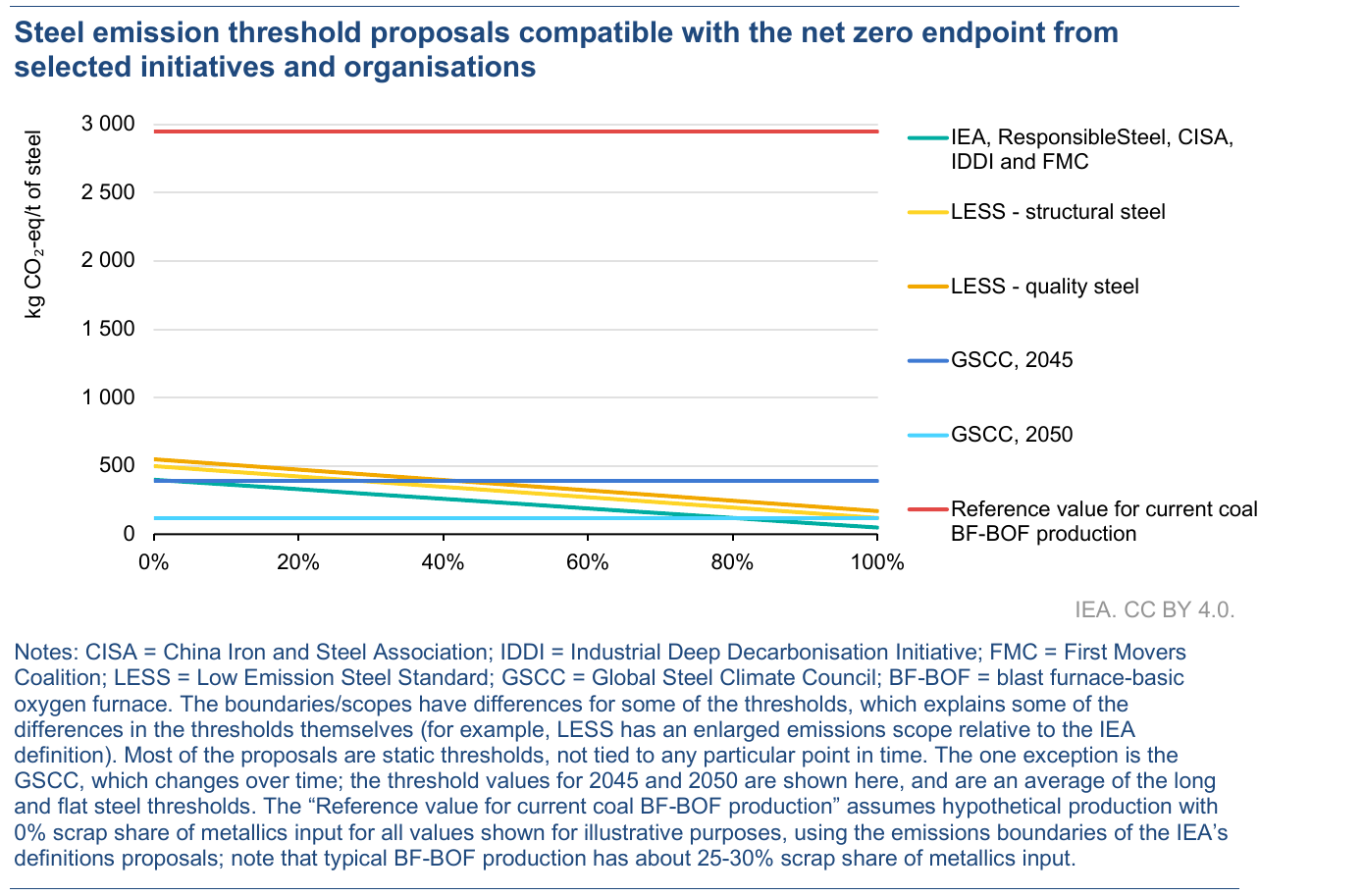
The key metric: emissions per tonne of steel
Carbon intensity expresses emissions relative to output. A common unit is t CO₂e per tonne of product. CO₂e means carbon dioxide equivalent, which combines the climate effects of the greenhouse gases included in the assessment.
Emissions intensity = greenhouse gas emissions allocated to the product within the stated boundary ÷ corresponding product output
For a simple unit conversion, 800 kg CO₂e per tonne equals 0.80 t CO₂e per tonne. A result expressed per kilogram needs its denominator converted too: 0.80 kg CO₂e/kg product also equals 0.80 t CO₂e/t product.
As industry context, the World Steel Association reports an average of 2.18 tonnes CO₂e per tonne of steel in 2024, covering scopes 1, 2 and 3 under the scope described in its publication. This figure represents the industry average. worldsteel also notes that alloying, quality requirements and processing affect product footprints. See Climate change and the production of iron and steel.
Calculation example: assume A is 1.20 t CO₂e/t and B is 1.60 t CO₂e/t. With comparable products, boundaries, methods and assumptions, A is 25% lower than B.
Material certificates, carbon footprints and EPDs
| Evidence | What it tells you | What to check |
|---|---|---|
| Material certificate (MTC) | Material identity, chemical composition and specified test results. | Grade, heat or batch, tests and delivery markings. See BS EN 10204:2004 for inspection document types. |
| EPD | Verified environmental information based on a life cycle assessment, covering more than climate impact alone. | Product coverage, declared unit, life cycle modules, product category rules, registration, validity and verification. |
| Product carbon footprint | The greenhouse gas result for a defined product system. ISO 14067 provides quantification and reporting requirements. | Boundary, calculation period, source data and whether independent verification covers the reported result. |
| ResponsibleSteel certification | Evidence against a steel certification scheme with defined requirements. | Whether the certificate covers a site or Certified Steel, its scope and the relevant progress levels. |
EPD Australasia explains that an EPD communicates environmental information. Product performance is assessed through the reported results and the materials they cover.
A product carbon footprint addresses climate impact specifically. ISO 14067 covers quantification and reporting. The report’s verification statement identifies any independent review.
ResponsibleSteel distinguishes Core Site Certification from Certified Steel. The latter adds requirements for decarbonisation and responsible materials sourcing. The certificate identifies the certified operation or product and its scope.
Why the processing boundary matters for alloy bars
Between crude steel and a finished bar, production can include rolling, quenching and tempering, peeling and grinding. The report’s boundary determines which operations and transport stages are counted.
Hot-rolled, quenched-and-tempered and precision-finished bars have different delivery conditions. See steel bar processing for an introduction to these operations.
The IEA’s Emissions Measurement and Data Collection for a Net Zero Steel Industry explains the need for transparent and comparable site- and product-level data. For purchasing, that means checking what the number includes before placing it next to another supplier’s result.
| Comparison item | What to look for in the report |
|---|---|
| Product and function | Does the result represent the specified grade, product form and delivery condition? |
| Boundary and unit | Is the result per tonne of crude steel, rolled bar or finished product? Which stages are included? |
| Method and data | Which rules, reporting period, production site, electricity assumptions and allocation approach were used? |
| Transport and recycling | Are delivery emissions included? Are future recycling benefits reported separately from manufacturing impacts? |
| Evidence coverage | Is the result specific to the product and facility, an average, or a modelled estimate? |
For EPD comparisons, matching the unit alone is insufficient. Check compatible product category rules, equivalent function and technical performance, life cycle stages and assessment methods. Read the declaration’s comparability statement together with the applicable rules, such as the International EPD System’s General Programme Instructions.
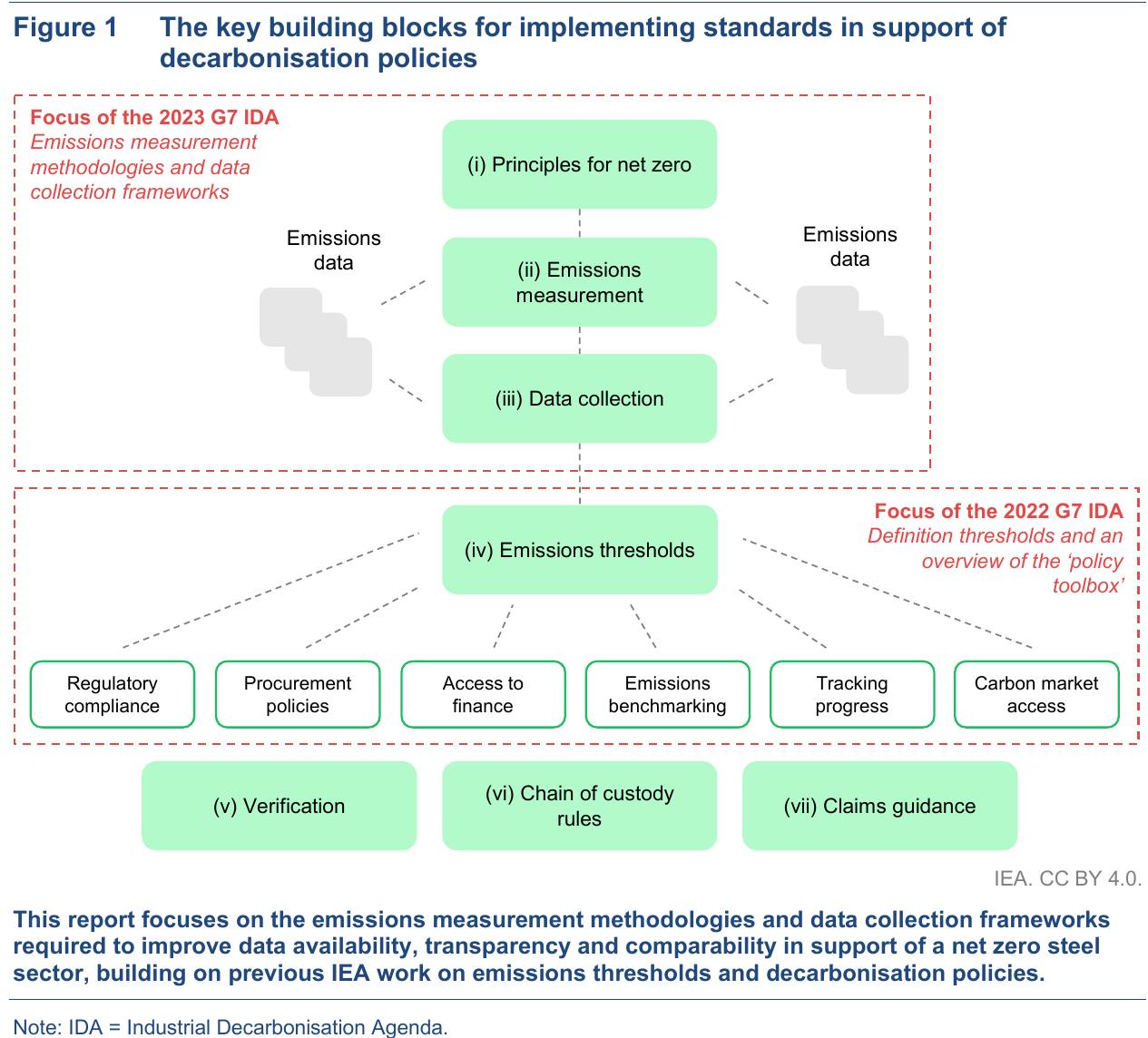
Evidence requirements by destination
Environmental documentation varies by destination, product and project. Here are three examples.
Australia: project evidence requirements
Australian buyers can search the EPD Australasia database for published declarations. For building projects using Green Star, the Green Building Council of Australia’s Responsible Products Framework explains how recognised initiatives support product assessment.
Green Star resources support building assessments. Mining, machinery and other industrial projects set their own document requirements.
Canada: qualifying federal construction projects
Canada’s Standard on Embodied Carbon in Construction sets disclosure and reduction requirements for qualifying federal construction projects. Its steel provisions address specified eligible products and call for manufacturing-stage emissions information supported by appropriate EPDs or the alternatives allowed by the standard.
The standard identifies the eligible projects and products; the project contract sets out the reporting details.
European Union: CBAM and imports
CBAM is the European Union’s Carbon Border Adjustment Mechanism, with a definitive regime operating from 1 January 2026. It concerns covered goods imported into the EU and has its own embedded-emissions rules and reporting system. See the European Commission’s official explanation.
CBAM uses its own calculation rules. Whether EPD data can be used depends on how its boundary and methods match those rules.
Reading a carbon footprint report
- Product: the grade, form and delivery condition covered.
- Result: emissions per tonne, units and reporting year.
- Operations: the steelmaking, processing and transport stages included.
- Data: facility measurements, industry averages or modelled estimates.
- Document: the issuer, validity and verification record.
Material traceability: connecting steel to its records
Heat and batch identifiers connect delivered steel to the corresponding records. These four checks help when reviewing a delivery:
Read the identifiers on the steel or packaging.
Find the corresponding material reference.
Check the grade, chemistry and test results.
Match the listed sizes and quantities.
Follow the same heat or batch reference across the records. See BS EN 10204:2004 for inspection documents and TÜV NORD’s explanation of marking transfer and traceability.
Making better use of each bar
Cut lengths, machining allowances and the use of offcuts are practical topics for purchasing and production teams. Considering delivery dimensions alongside later operations can reveal opportunities to reduce material waste. worldsteel’s circular economy guidance covers reducing material use, reuse, remanufacturing and recycling, including yield losses in downstream manufacturing.
Compare processing energy and service life alongside material use. Life cycle assessment (LCA) evaluates environmental impacts across these stages. See our steel bar processing introduction for the operations involved.
Common questions
Does traceable steel mean low-emissions steel?
Traceability identifies the records associated with a batch. An emissions assessment quantifies the greenhouse gases associated with a product. They require different information. See ISO 14067:2018 for product carbon footprint methods.
Does a material certificate contain carbon emissions data?
A material certificate primarily records material identity and specified test results. Carbon emissions are reported in a product footprint report or the climate-impact indicators of an EPD. Compare the purposes described in EN 10204 and EPD Australasia.
Does more scrap always mean better environmental performance?
Scrap share is one factor. The production route, energy supply and assessment boundary also affect the emissions result. The IEA’s 2024 report explains how scrap input relates to steel emissions thresholds.
How can bar buyers consider material efficiency?
Work back from the finished dimensions to cut lengths and machining allowances, then consider cutting layouts, offcut use and service life. This helps compare material inputs and processing operations. See worldsteel’s circular economy guidance.
Material traceability at JOTAIN
Our traceability work focuses on heat numbers, batches and material certificates to check material identity and test results.
Read about material records and delivery documents in our quality and documentation guide.
Explore material traceabilityReferences updated: 21 September 2026. Figure sources and licences appear in the captions.