
For a plant team planning rod mill charging, the starting point is the approved working charge and the condition of the rods already inside. Add make-up rods to maintain that charge; remove worn or damaged rods against the plant’s acceptance rules. Treat an initial fill, routine replenishment and a charge correction as different jobs, with separate entries in the operating record.
That distinction matters at the purchasing desk. A larger order may reflect higher throughput, replacement of damaged rods, or a deliberate increase in working inventory. It is not automatically evidence of faster wear. Before changing the steel specification, ask what the latest additions were intended to do.
New rods enter an existing population
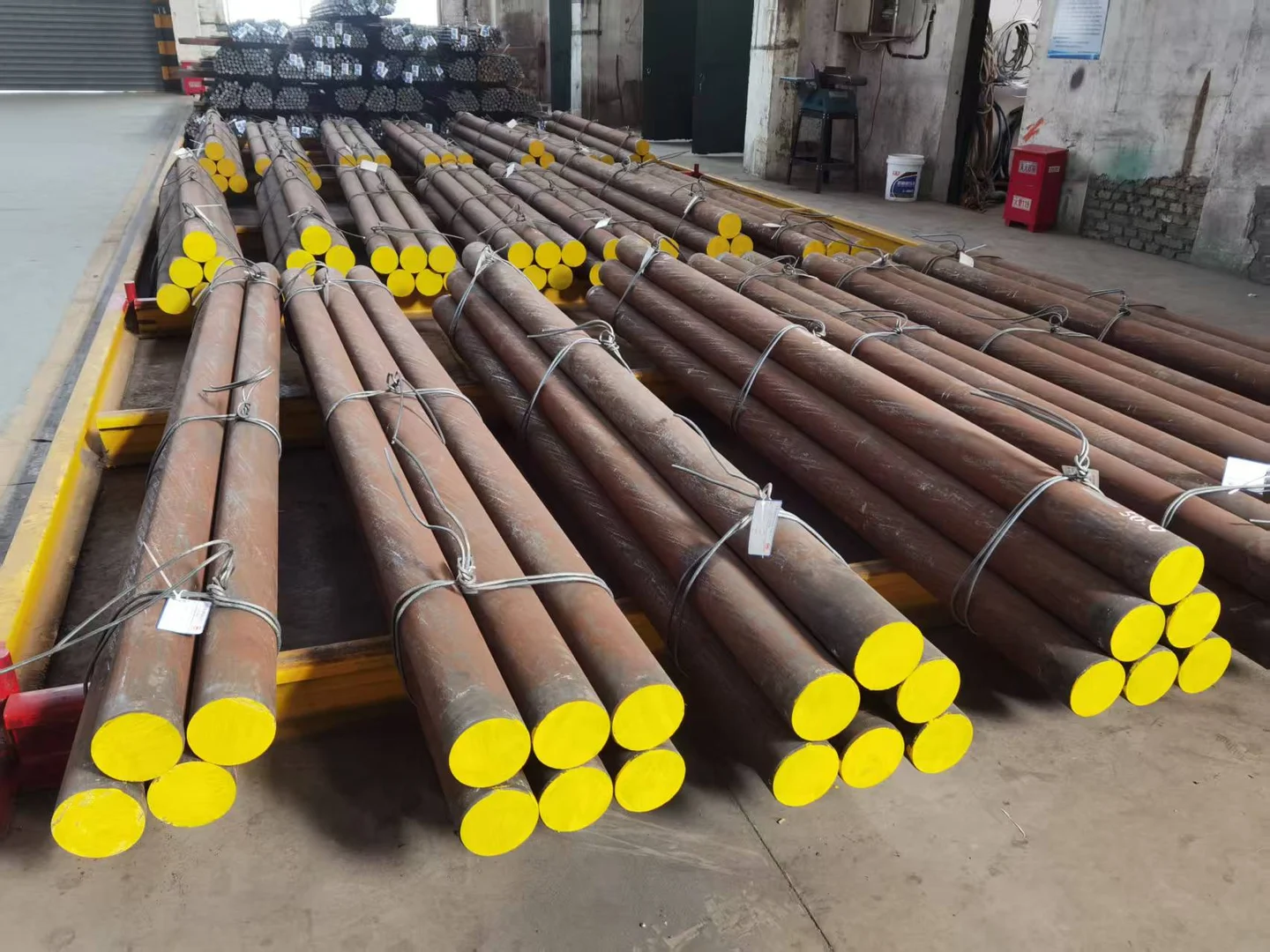
The delivery record identifies the new rods. The charging record shows when and where they began working alongside the old ones.
Select an image to open the full-size original.
Key takeaways
- Separate first fill, routine make-up and corrective additions.
- Keep the new-rod specification separate from the measured condition of worn rods.
- Record additions, removals and inventory change before interpreting kg/t.
First fill and make-up rods are different orders
An initial charge establishes the approved starting population. A replenishment order joins a population that already contains rods with different service histories and remaining dimensions. Repeating the first-fill order line is therefore not a complete make-up plan.
Swipe the table to view all columns →
| Job | What the record needs |
|---|---|
| Initial fill or complete rebuild | Approved total charge, size distribution, rod length, material condition and starting inventory. |
| Routine make-up | Approved new-rod size, quantity actually charged, lot identity, date, mill and replenishment interval. |
| Corrective addition after an event | The event, removals or inventory correction, engineering decision and revised baseline. |
The archived South African Qualifications Authority rod-mill training standard places rod and load specifications against the mill design and operating requirements. It also treats replacement assessment as a task in its own right. That is a useful distinction for the order: buying rods and deciding the charge are connected, but not identical.[1]
Keep two size records, not one
The purchase record states the nominal diameter and length of new rods. The shutdown record describes the rods found in service: remaining diameter at identified positions, length, end shape, straightness observations and any damage. Do not overwrite the nominal entry with a worn measurement; both are needed to understand the history.
For each new size, record the number of complete rods and the mass charged. Retain the delivery or bundle reference. For the worn population, use an agreed inspection sample and measurement positions, and show how it was selected. A photograph of the most unusual rod is worth keeping, but it does not describe the whole charge.
A change of make-up diameter changes what enters the mill; it does not instantly replace the steel already there. Mark the transition period and retain the old and new addition records. If the question is whether a different diameter suits the duty, use a controlled trial and the diameter, length and mill-fit guide to establish the dimensional plan.
Set the interval around the mill and the handling system
A useful replenishment interval balances the approved charge target, observed loss, operating pattern and the plant’s safe loading arrangements. Review the quantity per event as well as the number of events. “Three additions a week” says little if their masses, operating hours and intervening removals are unknown.
There is a concrete example at Black Mountain in South Africa. Multotec reports that an automated charger commissioned in mid-2016 reduced the charging operation from over an hour to about 25 minutes. Charging moved from twice to three times weekly. These are that installation’s reported results, not a recommended schedule for another mill.[2]
The handling equipment belongs in this decision. McLellan’s rod-charger description identifies the rack, retractable beam, rod-size loading arrangement and fit through the trunnion as parts of the installation. Check the proposed rods against the actual charger and site procedure before the order is fixed.[3]
For the next review, put the additions on a time line beside running hours, dry feed tonnes and planned stops. Mark a missed event, a partial load or a revised target explicitly. That makes an irregular charging history visible without mistaking it for a change in material quality.
Retire against a defined condition, not a convenient round number
The discard criterion belongs to the particular mill, rod geometry and operating plan. A single minimum diameter copied from another site cannot account for the original rod, uneven wear, a bent member or the condition of the ends. Keep the approved criterion, its measurement method and the person responsible for the decision in the inspection plan.
At a planned inspection, distinguish serviceable rods, worn rods selected for retirement, and damaged rods requiring investigation. Record the measured remaining dimensions and reason for removal. Weigh recovered material on the agreed basis; multiplying the count of worn rods by the new-rod nominal mass overstates the steel actually removed.
Inspection, mill access, recovery and charging must follow the mine’s isolation, lifting and task procedures. SAQA’s archived standard explicitly separates safe access, examination of the load and replacement decisions. It provides no universal discard diameter.[1]
If breakage, bending or tangling has appeared, preserve identifiable pieces and the event history. Use the breakage and bending investigation before treating every removal as ordinary wear. Record a recovered piece as mixed or unknown origin when the lot cannot be established.
Read the charge alongside the product
The mill record gives the steel record its meaning
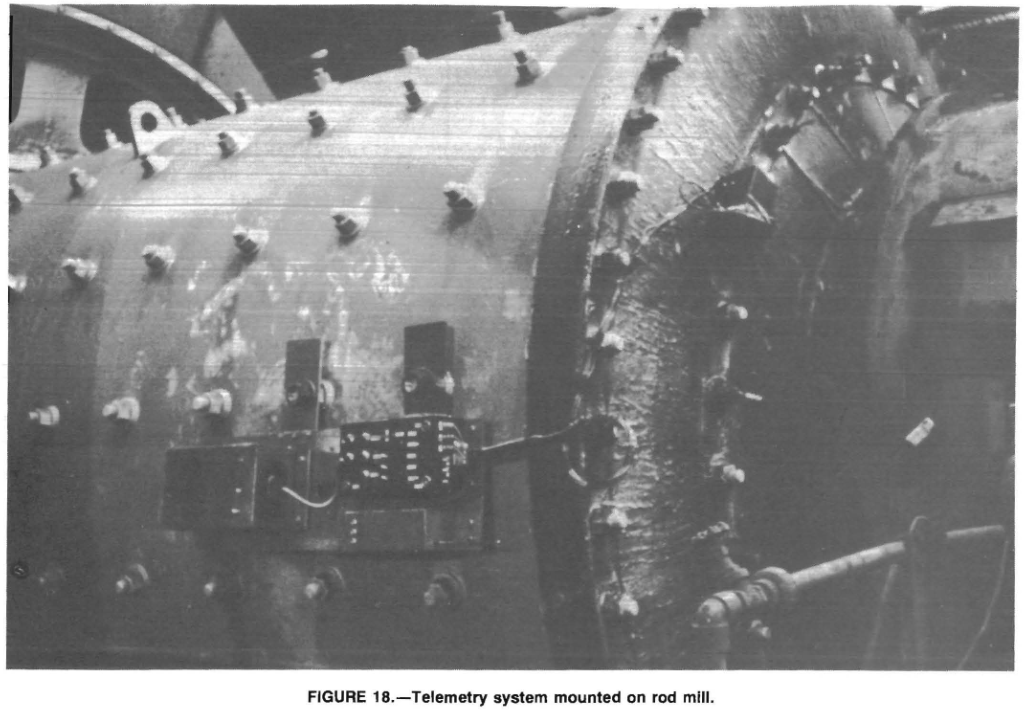
This historic installation illustrates plant measurement, not a JOTAIN supply reference. Keep the charge history connected to the named mill and its operating period.
Select an image to open the full-size original.
Metso distinguishes overflow, end-peripheral and centre-peripheral rod-mill arrangements, with different flow and product characteristics. Record the installed arrangement rather than assuming that a charging practice transfers unchanged between them.[4]
For a charge-change review, align the feed and product samples with throughput and power data. GMG’s 2022 circuit-survey guideline describes this coordinated record and includes charge-level measurement among the optional data. It is a measurement framework, not a target filling percentage.[5]
Before declaring a change successful, read the required product size fractions beside dry t/h, kWh/t, stoppages and damaged removals. A lower addition rate is no gain if the plant is quietly drawing down the working charge or missing its product requirement. Equally, a larger addition can be planned inventory restoration rather than worsening wear.
A charging log that the next shift can use
Use one entry for each addition or removal, with the same mill identifier used in the control-room record. Separate what was planned from what was actually done. These fields can be added to the existing grinding-rod trial ledger rather than creating a competing set of monthly totals.
Swipe the table to view all columns →
| Field | Record |
|---|---|
| Event | Date, time, mill, operator/reference and reason: make-up, rebuild, correction or removal. |
| New rods | Nominal diameter and length, complete-rod count, net mass, supplier and heat/treatment-lot or bundle reference. |
| Removed rods | Count and recovered mass; worn, damaged or serviceable transfer; remaining dimensions and sample/photo references. |
| Operating interval | Running hours and dry feed tonnes since the preceding event; stops and relevant process changes. |
| Working inventory | Latest assessment, method, date, uncertainty and any approved change in the target. |
| Decision | Deviation, person approving it, follow-up and next review. |
An extra tonne in the mill is not a tonne worn away
Consider this illustrative one-period reconciliation. It is a worked calculation, not a JOTAIN mill result. There are no serviceable transfers in or out, and the recovered removals are discarded.
Swipe the table to view all columns →
| Item | Mass |
|---|---|
| Opening working inventory | 20,000 kg |
| New rods charged | +2,000 kg |
| Recovered rods discarded | −500 kg |
| Closing working inventory | 21,000 kg |
The unrecovered balance is 20,000 + 2,000 − 500 − 21,000 = 500 kg. With complete measurements, it represents steel lost from the charge rather than recovered as rods; measurement error and unrecorded movements also appear here. Do not label an unexplained balance as measured wear.
The total replacement burden is 2,000 − (21,000 − 20,000) = 1,000 kg: 500 kg discarded plus the 500 kg balance. At 10,000 dry tonnes of new feed, that is 0.10 kg/t, not the 0.20 kg/t obtained by dividing additions alone by feed tonnes. Do not subtract the discarded mass again when reporting this total burden.
The operational lesson is simple: preserve the inventory assessment when changing the charge. For transfers, uncertainty and a complete supplier-trial calculation, use the consumption and trial guide.
Give purchasing the make-up plan
Keep store stock separate from working stock
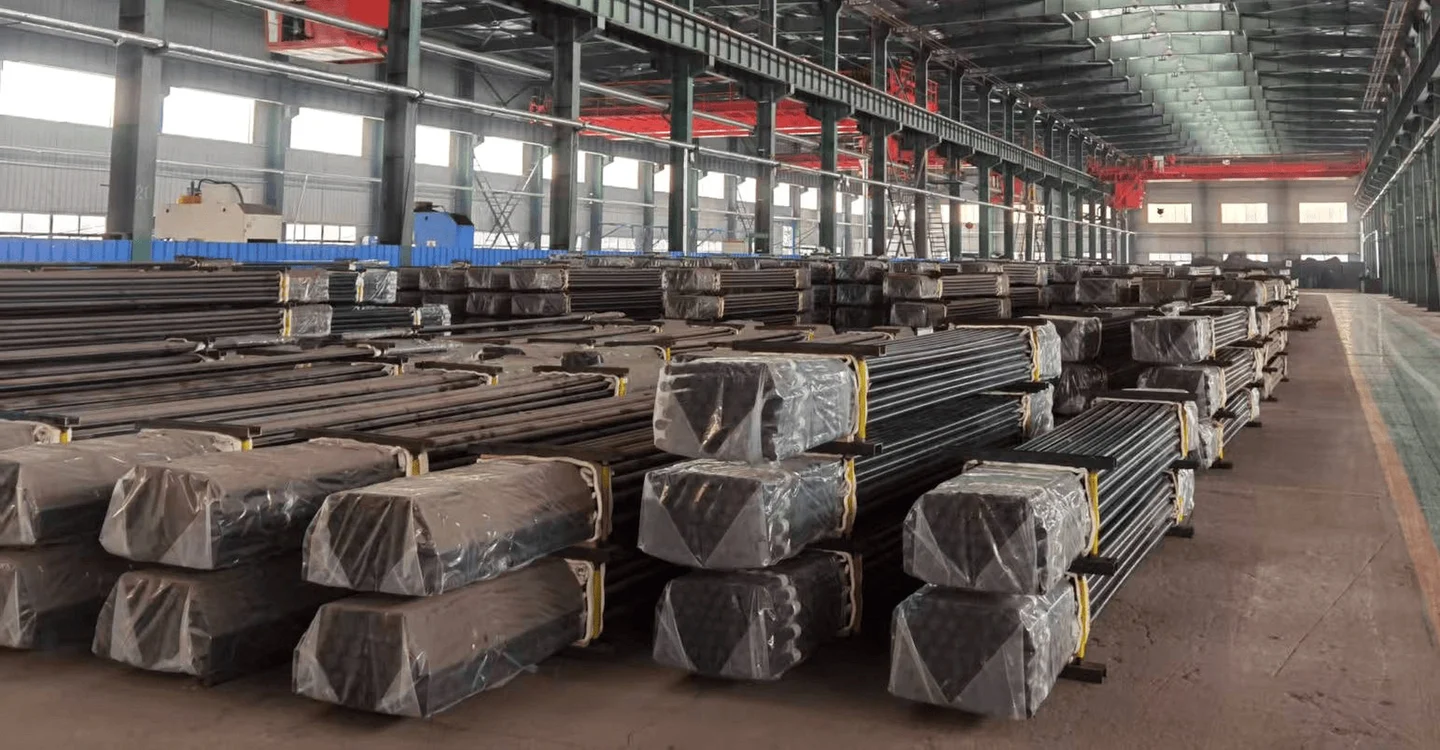
Track receipt, release to the mill and actual charging as separate movements. A store issue is not always a completed charge.
Select an image to open the full-size original.
The enquiry should say whether the order is for an initial fill, routine make-up or an approved trial. Attach the new-rod size and delivery condition, the current charge record, planned additions and the latest removal findings. Include the charger constraints and the required receiving date.
JOTAIN manufactures and supplies heat-treated grinding rods with straightening and fixed-length cutting. We review the dimensions, material condition and inspection requirements against your mill brief. The 65Mn supply specification and purchase file cover what to put on the order; your plant’s approved plan determines what enters the mill.
For rod mill charging, the next useful document is therefore a linked record: the rods specified, the rods charged and the rods recovered. It gives the operator a clear handover and gives purchasing a defensible reason for the next order.
Questions buyers ask
How often should grinding rods be added to a rod mill?
Use the plant’s approved replenishment plan and review the actual mass per event against running hours, throughput, removals and working inventory. The safe loading arrangement also matters. A frequency quoted for another mine is a case example, not a schedule for your mill.
Is the make-up rod size the same as the worn rod diameter?
No. Make-up size describes new rods entering the mill; worn diameter describes a measured position on a rod already in service. Keep both records, together with original length, remaining geometry and the measurement method. They answer different purchasing and maintenance questions.
At what diameter should worn grinding rods be removed?
Apply the discard criterion approved for the installed mill and rod specification. Remaining diameter alone does not describe bending, end damage or uneven wear. Record the measurement and reason for removal, and refer unusual failures to the plant’s investigation procedure.
Does the mass of rods charged equal media consumption?
Only when the other mass movements and working inventory change support that interpretation. Additions may increase the charge or replace discarded rods. Reconcile opening and closing inventory, transfers and recovered removals before separating total replacement burden from unrecovered steel loss.
References
- Maintain grinding medium load in a rod mill — Unit Standard 256697
- Rod charger from Multotec enhances safety at Black Mountain
- Rod Charger — features and facility-specific arrangement
- Basics in Minerals Processing — 3:31, Grinding: tumbling mills
- Methods to Survey and Sample Grinding Circuits for Determining Energy Efficiency (GMG03-MP-2022)
- Determining Corrosion Rates in Industrial Ore Grinding Environments — RI 9166
Technical enquiry
Start with the mill and the rods in service.
Send the mill drawing, current rod specification, operating records, quantity and destination. We will review the material route, dimensions and inspection requirements.