
A rod mill uses long rods; a ball mill uses balls. Rod milling commonly serves a relatively coarse, controlled grinding duty, while ball milling is widely used for finer grinding. The useful comparison starts with the ore, the product required and the position of each mill in the circuit.[1]
For a media buyer, the first question is whether the plant wants to change its process or replace a consumable in an existing process. A flowsheet change needs plant engineering and testwork. A replacement-media enquiry needs the installed mill, its operating baseline and a product specification. Mixing those two decisions makes quotations hard to compare.
The mill is only one part of the buying decision
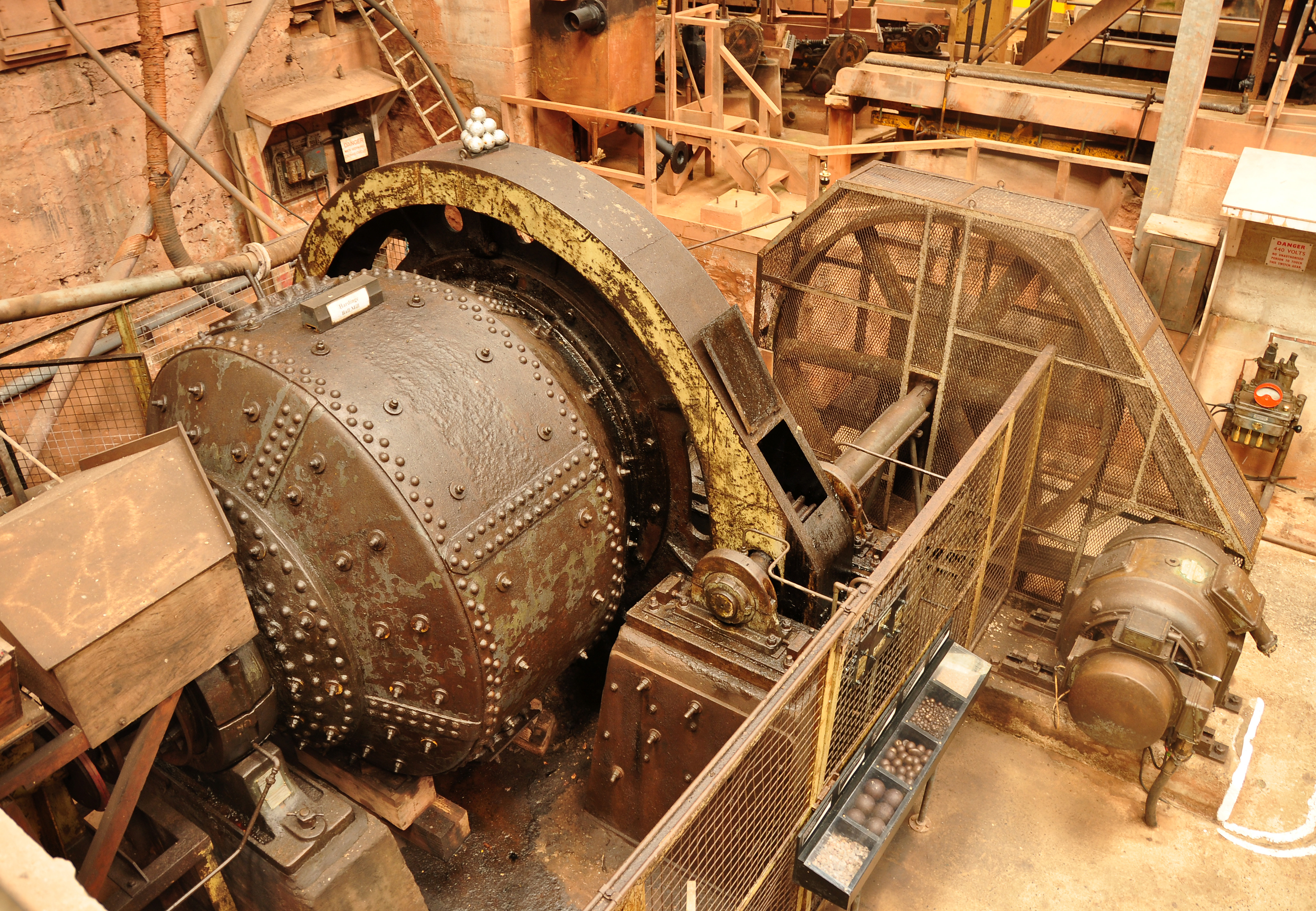

The historic Geevor plant shows the mill in its installed setting. For a current media order, identify the machine and work from its drawings, feed and discharge arrangements.
Select an image to open the full-size original and inspect its labels.
Key takeaways
- Match the media enquiry to the named mill and grinding duty.
- A rod order needs length, straightness and end requirements as well as diameter and material condition.
- Compare consumption only alongside the product, dry throughput and operating conditions achieved.
Rod mill vs ball mill: the differences that belong on the enquiry
Metso describes rod milling in terms of coarse grinding and a relatively narrow size distribution. Its horizontal-mill literature also distinguishes wet and dry arrangements. Treat these as process characteristics, not a promise that rods will always give the best result for a particular ore.[1][2]
Swipe the table to view all columns →
| Question | Rod mill | Ball mill |
|---|---|---|
| What is being charged? | Long rods; diameter, length, ends and straightness all need definition. | Balls; make-up diameter or size mix and dimensional acceptance need definition. |
| What is the process target? | Often a coarse product with control of the size distribution. | Often a finer grinding duty; specify the actual product and circuit. |
| What has to fit? | The working length, liners, end geometry and rod-handling arrangement. | The charging arrangement and the mill’s approved ball-size and charge conditions. |
| What material evidence travels with the order? | Grade, delivery condition, hardness locations, treatment-lot identity and ordered tests. | Media type, chemistry, treatment condition, hardness locations, integrity checks and ordered tests. |
| What goes in the operating record? | Additions, charge changes, wear, broken/bent removals and process results. | Additions, charge changes, worn or damaged removals and process results. |
For procurement, turn the material and inspection fields into agreed limits, sampling and reporting requirements. Those details make competing quotations comparable.
Start with the product the next stage needs
“Finer” is not a complete plant objective. Ask what the next stage needs from the grinding circuit: a stated size distribution, a liberation target or a suitable feed for the downstream process. Put that requirement beside the feed distribution and ore identity. A change of ore blend can be as important to the comparison as a change of media.
F80 and P80 identify the sizes at which 80% of the feed and product, respectively, pass. Keep the full size distributions where available: one passing size does not describe every fine or coarse fraction. GMG’s circuit-survey guidance calls for coordinated feed, product, throughput and power measurements so the records describe the same operating period.[3]
On the enquiry, name the circuit location. Is this the first grinding stage, a downstream ball mill, or a regrind duty? Is the mill open circuit or connected to classification? Include a simple flowsheet. The media supplier needs to know which stream the reported tonnes and particle sizes refer to.
Measure the circuit, not just the delivery
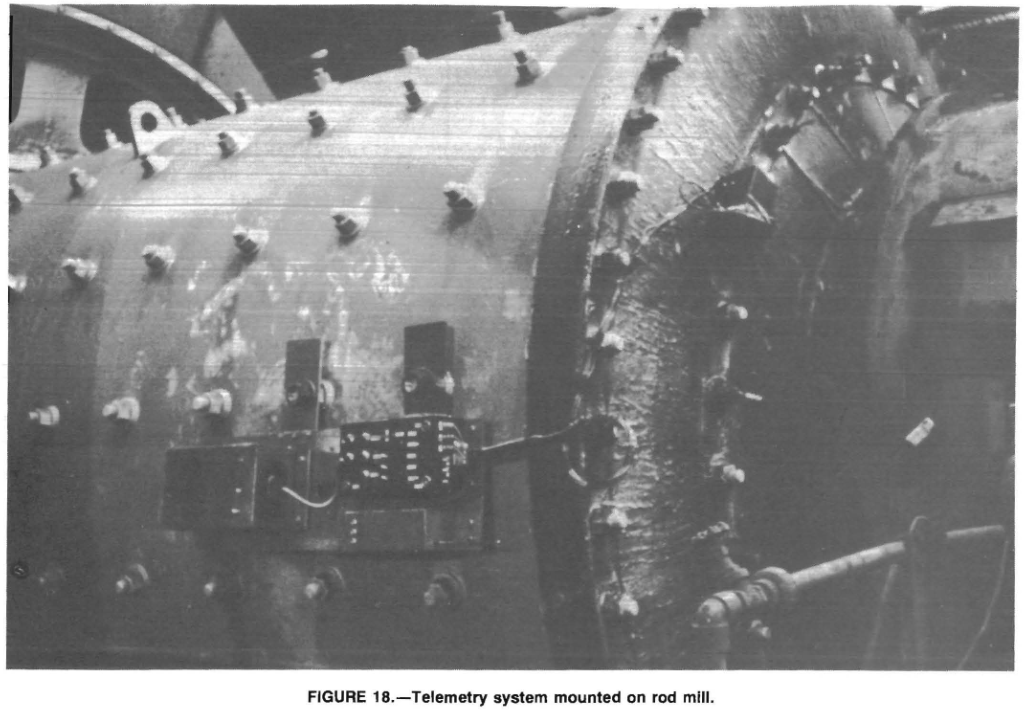
The photograph documents a particular research installation. For a supplier comparison, retain the operating record and sampling conditions belonging to the named mill.
Select an image to open the full-size original and inspect its labels.
A rod diameter is only half the dimensional order
A grinding rod has to fit along its length as well as across its diameter. Record the installed working space, liner condition, end arrangement and approved clearance. Then state the rod’s length tolerance, straightness method and end condition. The nominal shell length is not the ordered rod length.
Equipment data sheets make the distinction visible. Metso’s Select rod- and ball-mill tables list machine diameter, effective grinding length and installed power. These are machine dimensions and ratings, not a finished-media specification. Use the current mill drawing to establish fit.[4][5]
Length follows the installed mill
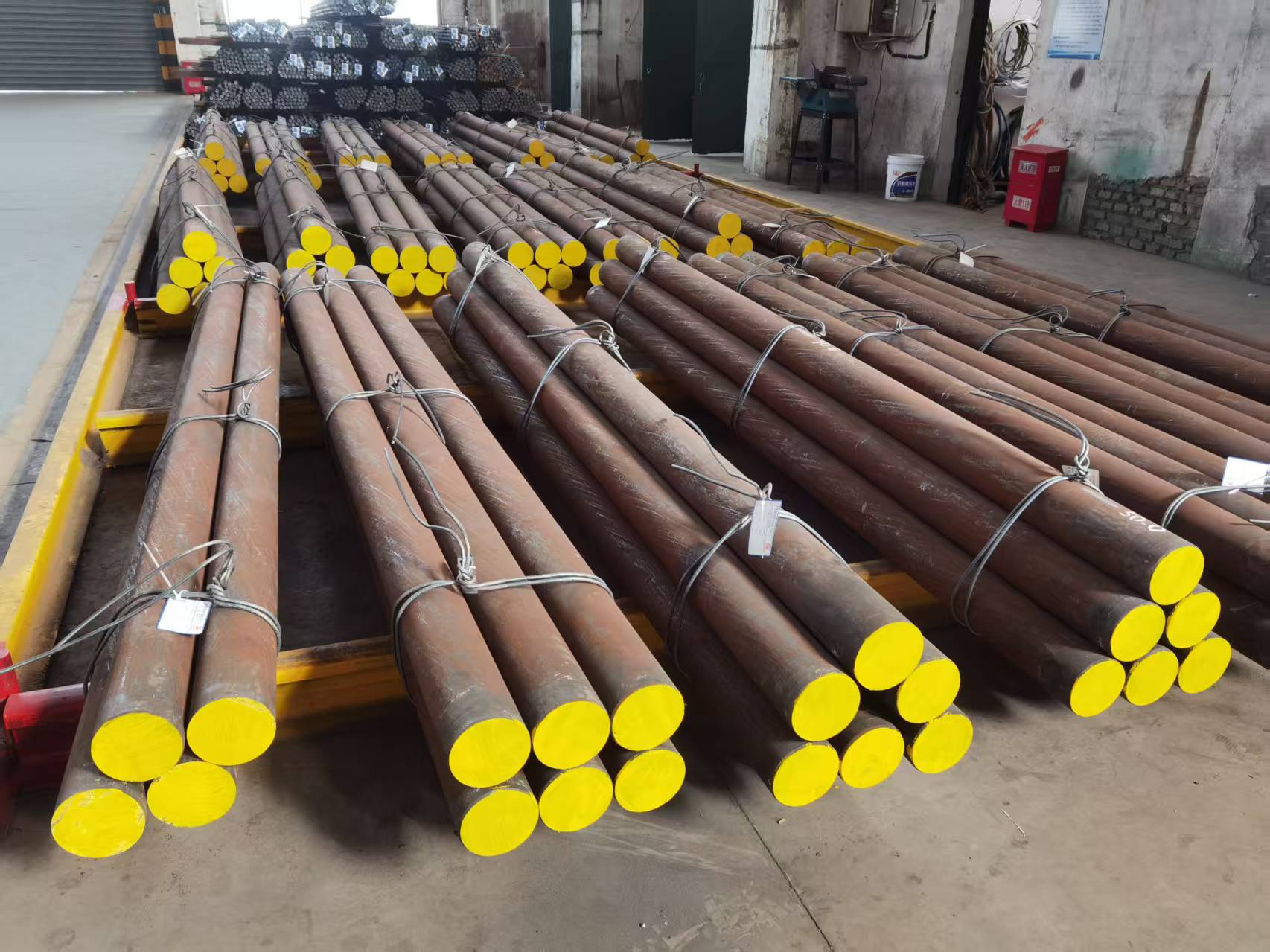
Connect the nominal dimensions to tolerances and measured results. Bundle labels link the packing list to the delivered rods; the inspection record carries the measurements.
Select an image to open the full-size original and inspect its labels.
For a ball-media enquiry, establish the approved make-up size or mix and the ball specification. For a rod enquiry, add length, straightness and ends. Do not turn a ball-diameter recommendation into a rod-diameter recommendation simply because both are expressed in millimetres.
The rod diameter and length guide takes the rod enquiry from the installed geometry through a controlled size trial. Keep the existing grade and treatment condition in the comparison when the purpose is to test diameter alone.
Even the laboratory tests ask different questions
A report labelled only “Bond work index” leaves a useful question unanswered: which test? GMG specifies separate rod- and ball-mill procedures. The preparation sizes, material charges and circulating loads differ.[6]
Swipe the table to view all columns →
| Laboratory condition | Rod-mill work-index test | Ball-mill work-index test |
|---|---|---|
| Prepared feed: all passing | 12.7 mm | 3.36 mm |
| Packed material charge | 1,250 cm³ | 700 cm³ |
| Target circulating load | 100% | 250% |
Source: GMG, Determining the Bond Efficiency of Industrial Grinding Circuits, Sections 5.2–5.3. These numbers describe laboratory procedures, not recommended feed sizes, filling levels or circulating loads for a production mill.[6]
SGS likewise reports the rod and ball indices separately and notes that an individual ore can give different values in the two tests. Ask for the test name, sample identity, preparation, closing screen, F80, P80 and reporting basis. Keep the laboratory report with the result.[7]
Use this information to describe the ore and support the engineering review. It does not measure the life of the proposed grinding rods. Ore grindability, steel hardness and media consumption are three different records; do not substitute one for another.
Write the hardness requirement around the product being supplied
“High hardness” is not enough to compare offers. Identify the finished product, the treatment condition, the test method and the locations at which readings are required. For a rod, a surface reading and a cross-sectional profile answer different questions. For ball media, the supplier’s surface and internal measurements also need defined positions and specimen preparation.
Request the report for the ordered test unit. It should contain the actual readings, the applicable limits, the sample identity and a link to the heat or manufacturing lot. That record lets the receiving team check the result against the requirement.
Keep the result connected to its sample
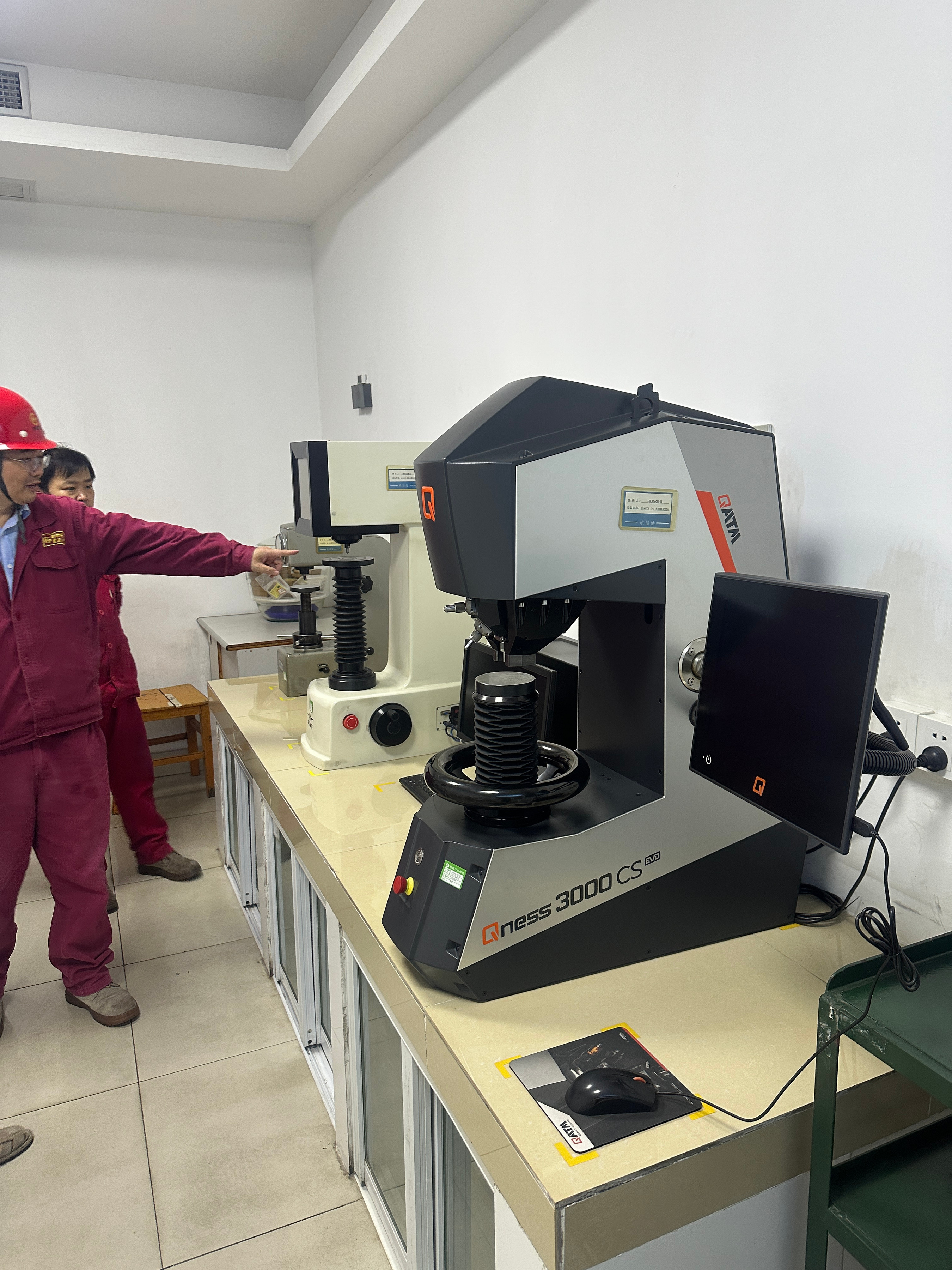
Equipment and manufacturing context. Delivery acceptance uses the measurements and lot identity in the order-specific report.
Select an image to open the full-size original and inspect its labels.
Use the surface-to-core hardness guide to define the rod requirement, and the batch-consistency guide to connect the test results to the delivered bundles.
Compare cost at the same grinding duty
A rod mill and a downstream ball mill may process the same ore but do different work. Their kg/t results are not a head-to-head supplier test. One may receive a coarser feed; the other may have a finer product target or a different circulating load. Keep each result attached to its circuit boundary.
For a supplier trial within one mill, reconcile additions, serviceable transfers and the change in working-charge inventory. Divide by dry metric tonnes of new feed for the same period. Record damaged removals separately. Then compare the product, throughput, power and relevant operating changes alongside the consumption figure.
Swipe the table to view all columns →
| Measure | Useful record |
|---|---|
| Media consumption, kg/t | Reconciled replacement burden per dry metric tonne of new feed. |
| Product | P80 and the relevant size fractions or process acceptance target. |
| Throughput and energy | Dry t/h and measured kWh/t, with the power measurement basis. |
| Reliability | Damaged removals, stoppages and documented handling events. |
Media cost per dry tonne is the reconciled kg/t multiplied by the delivered price per kilogram. Retain documented removal and downtime costs on an agreed basis, with one-off trial costs shown separately. Judge the offer by the cost of achieving the required product in the same duty.
Use the existing consumption-trial method, trial ledger and cost-per-tonne worksheet rather than starting a second, incompatible record for the same mill.
Changing the media is not the same as converting the mill
Replacing a rod supplier keeps the agreed rod-mill duty and product specification in view. Converting a rod mill to ball service changes the engineering question. Before a purchase order, the plant and equipment engineer need to review the charge, liners, speed, power, feed and discharge arrangements, classification and handling system.
Metso’s liner guidance treats shell and head linings, discharge systems and the mill’s operating conditions as a connected design. It is another reason not to treat a conversion as a simple exchange of equal steel mass.[8]
Ask which approval already exists. If the conversion has not been engineered, the next document is a testwork or modification brief. If the mill configuration is settled, the next document is the media specification. That distinction keeps the supplier’s quotation useful and the plant’s decision clear.
What to send with the media enquiry
Send the mill identification and a brief description of the problem before sending a target price. Include the current media specification and recent operating records. Photographs of worn or damaged media are more useful when they carry a date, scale and mill or lot identity.
Swipe the table to view all columns →
| Include | So the review can answer |
|---|---|
| Mill identity, drawing and circuit position | What equipment and stream does this order serve? |
| Ore, feed distribution and product target | What grinding work is required? |
| Current media, charge and addition/removal history | What is changing, and what is the baseline? |
| Material condition, dimensions, limits and tests | What exactly will the supplier manufacture and report? |
| Quantity, packing, destination and required receipt date | What has to be confirmed in the commercial offer? |
For grinding rods, JOTAIN reviews the material route, heat treatment, dimensions and inspection requirements against this brief. Start with the grinding-rod purchase file, then send the drawing and current rod specification. A clear duty and a traceable specification are a better starting point than a comparison based on price and hardness alone.
Questions buyers ask
What is the main difference between a rod mill and a ball mill?
The grinding media are long rods in one and balls in the other. Rod milling commonly serves a coarser, controlled-size duty; ball milling is widely used for finer grinding. Confirm the ore, product target and circuit rather than selecting a mill from that general distinction alone.
Are grinding rods and grinding balls interchangeable?
Not as a routine purchasing substitution. A change of media type calls for review of the mill, charge, liners, speed, power, feed and discharge arrangements and the surrounding circuit. Obtain the plant’s engineering approval before specifying media for a converted duty.
Is a Bond rod-mill work index the same as a ball-mill work index?
No. They come from different laboratory procedures and size-reduction conditions. Request the full test name, sample identity, preparation and closing screen, along with F80, P80 and the reporting basis. Neither test is a direct measurement of grinding-media life.
Which media give the lower cost per tonne of ore?
Compare the cost of delivering the required process result. Reconcile media consumption, then read it alongside product size, dry throughput, energy and documented failures or stoppages. A rod mill and a downstream ball mill doing different work do not provide a like-for-like media cost comparison.
What information is needed for a grinding-rod quotation?
Provide the named mill, installed working dimensions, current rod size and material condition, ore and product target, quantity, inspection requirements, packing and destination. Include the operating problem and baseline records if the purchase is intended as a trial.
References
- Basics in Minerals Processing — Grinding: tumbling mills
- Horizontal mills — grinding solutions
- Methods to Survey and Sample Grinding Circuits for Determining Energy Efficiency
- Select™ Rod Mills — data sheet
- Select™ Ball Mills — data sheet
- Determining the Bond Efficiency of Industrial Grinding Circuits, Sections 5.2–5.3
- An Overview of the Small-scale Tests Available to Characterize Ore Grindability
- Mill liners
- Determining Corrosion Rates in Industrial Ore Grinding Environments — RI 9166
- Geevor Mine 13 — ball-mill photograph
Inquiry support
Start with the mill and the current media.
Send the mill drawing, current rod specification, ore and product target, operating records, quantity and destination. We will review the material route, dimensions and inspection requirements.